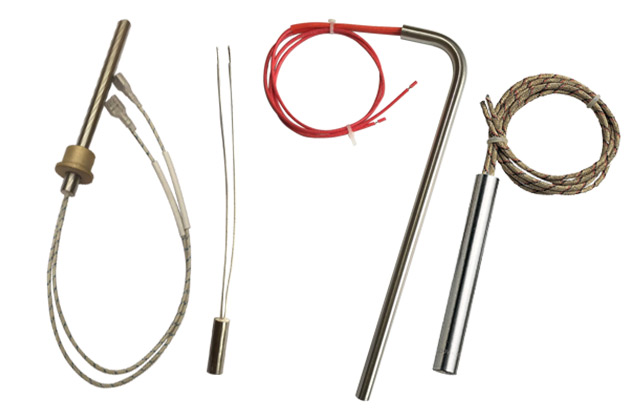
Flexible Stranded Heating Ropes
Flexible stranded ropes for uniform heat distribution
About Stranded Heating Ropes
Stranded heating ropes are constructed by twisting multiple strands of resistance alloy wire together to form a flexible, rope-like heating element. The stranded construction provides superior flexibility compared to solid wire, allowing the rope to be bent, coiled, and routed through complex paths for uniform heat distribution.
Stranding is not simply a matter of connecting several wires in parallel; the stranding process delivers a genuine improvement in structural mechanics, thermal performance and application flexibility. Compared with a single solid heating wire, stranded heating ropes offer the following key advantages:
Flexibility and fatigue resistance: The bending stiffness of a solid conductor is proportional to the fourth power of its diameter, so a single thick wire needed for high power becomes rigid and hard to bend, and repeated flexing readily causes metal fatigue fracture. Distributing the same cross-sectional area of metal into multiple fine strands (such as 7, 19 or 37) and stranding them greatly reduces the equivalent bending stiffness of the rope, allowing it to withstand millions of bending cycles without breaking in moving, coiling or vibrating applications (such as movable heating blankets, robot-joint heating and pipe trace heating), and to conform closely to complex surfaces such as valves, irregular vessels and medical catheters, with high conformity and no gaps.
Heat dissipation and thermal response: A multi-strand construction gives the conductor a total surface area far larger than a single solid wire of the same cross-section, so heat transfers faster from the conductor interior to the outer insulation and the heated object, reducing internal heat build-up; because each fine strand has a small radius and a short conduction path, the thermal response time is shorter and the set temperature is reached more quickly. In AC applications, the multi-strand structure also helps current distribute more evenly across the cross-section, improving material utilisation.
Structural reliability and fault tolerance: The stranded construction allows tiny relative slips between strands during installation tension or thermal expansion, absorbing internal stress and avoiding fracture caused by the large internal stresses of thermal expansion and contraction; even if an individual strand breaks due to a manufacturing defect or extreme external force, the remaining strands still maintain electrical continuity and heating function (with a slight drop in power), providing higher system safety.
We offer three standard constructions:
- 7-strand — Light-duty, most flexible, for tight-radius bending
- 19-strand — Medium-duty, balanced flexibility and power
- 37-strand — Heavy-duty, higher wattage for demanding applications
Available in NiCr (nickel-chromium) and Pure Nickel materials. Custom lengths and configurations available upon request.
Specifications and Characteristics of Common Stranded Resistance Wires
Stranded heating rope wire gauges and strand counts
| Alloy Grade | Overall Nominal Dia. (mm) | Strands × Wire Dia. (mm) | Main Wire Dia. (mm) | Resistance per Metre (Ω/m) | Length per kg (m/kg) | Weight per Metre (g/m) |
|---|---|---|---|---|---|---|
| Cr20Ni80 | 2.76 | 37 × 0.385 | 0.450 | 0.2794 | 28 | 36 |
| Cr20Ni80 | 2.67 | 19 × 0.523 | 0.574 | 0.2850 | 29 | 34 |
| Cr20Ni80 | 2.87 | 19 × 0.574 | 0.574 | 0.2394 | 25 | 41 |
| Cr15Ni60 | 2.76 | 19 × 0.523 | 0.574 | 0.2902 | 30 | 34 |
| Pure Nickel(N6) | 2.87 | 19 × 0.574 | 0.574 | 0.0198 | 21 | 47 |
Other sizes and specifications of stranded heating ropes are available upon request.
Heating Rope vs. Solid Heating Wire
| Feature | Solid Heating Wire | Stranded Heating Rope |
|---|---|---|
| Flexibility | Poor; extremely stiff at large diameters | Excellent — can be bent and knotted freely |
| Fatigue resistance | Low; breaks easily under repeated bending | High — suited to dynamic and vibrating environments |
| Thermal response | Slower; heat dissipates slowly from the centre | Fast — large surface area, uniform heat dissipation |
| Conformity | Hard to conform to complex curved surfaces | Perfect conformity — no air gaps, high thermal efficiency |
| Cost | Lower; simple process | Higher; complex stranding process |
| Typical applications | Fixed heating tubes, furnace coils, simple heating elements | Movable heating pads, pipe trace heating, medical catheter heating, aviation de-icing |
In one sentence:
By dividing the whole into many fine strands, a stranded heating rope trades a small amount of manufacturing cost for a qualitative leap in flexibility, fatigue resistance and heat-exchange efficiency, making it the ideal solution for complex-shape and dynamic heating scenarios.
Applications
Where stranded heating ropes provide the best solution
Floor & Surface Heating
Stranded ropes routed in serpentine patterns for even floor warming and surface heating systems.
Pipe & Vessel Tracing
Flexible ropes wrapped around pipes, valves, and vessels for freeze protection and process temperature maintenance.
Industrial Oven Liners
Rope elements threaded through ceramic fiber liners for uniform heat distribution in batch and continuous ovens.
De-icing & Snow Melting
Stranded heating cables embedded in concrete or mounted on surfaces for outdoor de-icing applications.
Related Products
Explore our other heating products
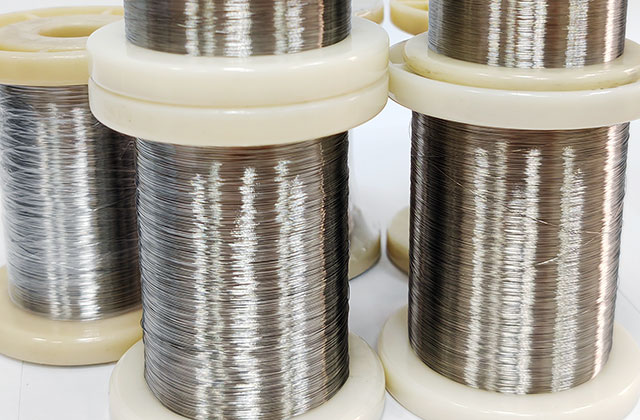
NiCr Resistance Wires
High-temperature nickel-chromium wires used as the raw material for stranded ropes.
View Details